
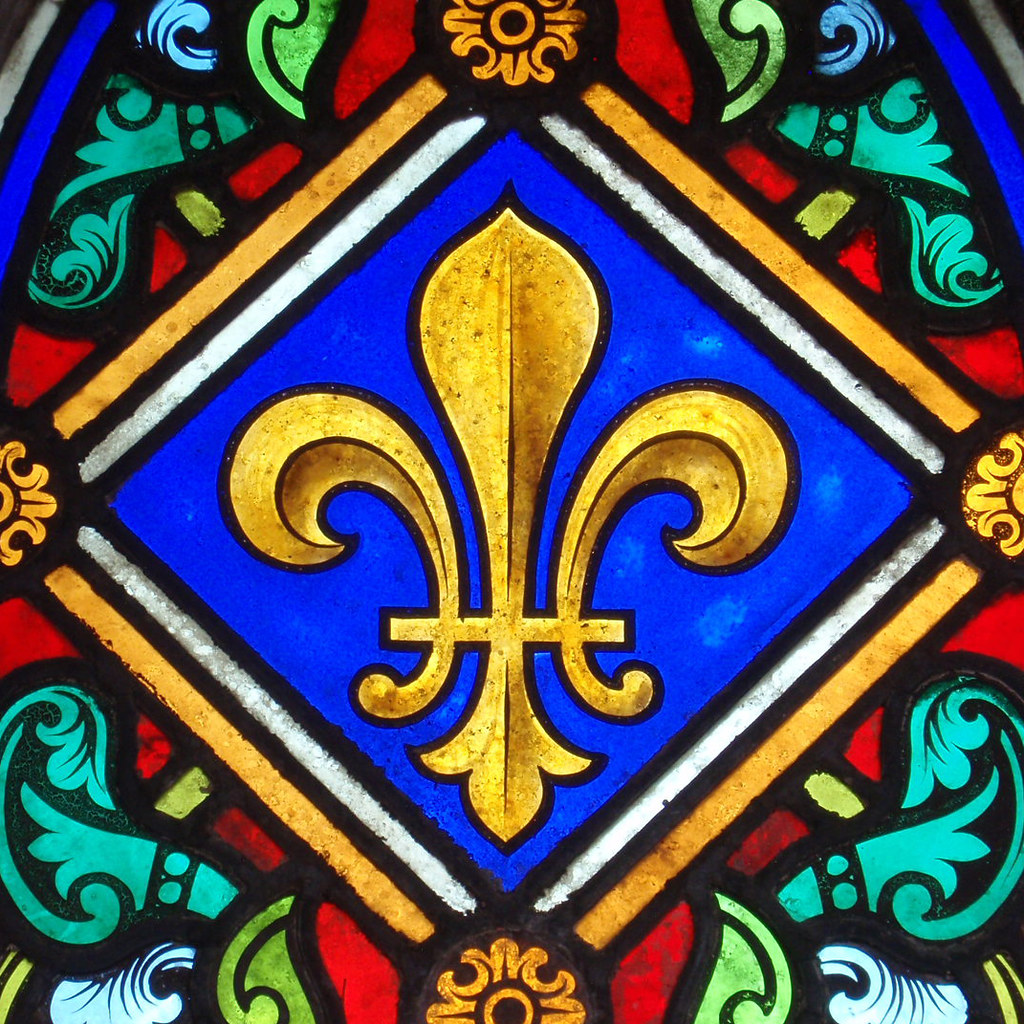
The Fleur-de-Lis: A Symbol of Scouting and Beyond
The fleur-de-lis, a stylized lily flower, is a symbol rich in history and meaning. It has been used for centuries in various cultures and contexts, and its enduring appeal is evident in its widespread adoption as a symbol of the Boy Scouts and Girl Scouts.

Historical Significance of the Fleur-de-Lis
While the exact origins of the fleur-de-lis are debated, it’s clear that its symbolism has evolved over centuries. Some historians trace its roots to ancient Egypt, where similar motifs appeared in hieroglyphics. Others point to its association with the lily flower, a symbol of purity and innocence in many cultures
The fleur-de-lis became closely associated with the French monarchy during the Middle Ages. Legend has it that a golden lily appeared miraculously to Clovis I, the first king of the Franks, as a sign of divine favor. This event solidified the fleur-de-lis as a symbol of French royalty.
Over the centuries, the fleur-de-lis appeared on French coats of arms, flags, and royal seals. It was a symbol of power, sovereignty, and the divine right. The fleur-de-lis, often associated with French royalty, has roots dating back to the Merovingian dynasty. It has been used as a symbol of purity, light, and life. In heraldry, it represents courage, nobility, and loyalty. The fleur-de-lis is also associated with the Virgin Mary and has been used in religious iconography.
In Christian art, it is often used to represent the Trinity or the Virgin Mary. The three petals of the flower can symbolize the Holy Trinity: the Father, the Son, and the Holy Spirit.

The Fleur-de-Lis and Scouting
Robert Baden-Powell, the founder of the Scouting movement, chose the fleur-de-lis as the symbol of Scouting for several reasons:
- Simplicity: The fleur-de-lis is a simple yet recognizable symbol that can be easily drawn and reproduced.
- Positive Associations: The symbol’s historical and cultural significance aligns with the values of Scouting, such as honor, courage, and service.
- Direction: The three petals of the fleur-de-lis can be interpreted as representing the three Scout Laws: A Scout’s honor is to be trusted, A Scout is loyal, and A Scout is helpful.
When Baden-Powell first introduced Scouting, he initially used an arrowhead as the symbol. However, this symbol was met with criticism as it was seen as too militaristic. To address these concerns, Baden-Powell replaced the arrowhead with the fleur-de-lis, a symbol of peace and purity. He saw the three points of the fleur-de-lis as representing the three parts of the Scout Promise: Duty to God and Country, Duty to Others, and Duty to Self.
In 1909, two stars were added to the emblem. These stars represented the two eyes of a Wolf Cub, symbolizing the opening of a young Scout’s mind to the world. Later, the ten points of the stars came to represent the Ten Points of the Scout Law.
In the mid-20th century, the World Crest was added to the Scout emblem. It symbolizes the unity and diversity of the worldwide Scouting movement.

The Scout emblem continues to evolve, adapting to the changing times. Recent redesigns have focused on modernizing the symbol while preserving its core values and heritage. The fleur-de-lis remains the central element, representing the enduring spirit of Scouting.
The fleur-de-lis has become a powerful symbol of Scouting, representing the organization’s commitment to character development, citizenship, and personal fitness. It continues to inspire young people around the world to embrace the values of Scouting and make a positive impact on their communities.
 richardswainnc.com
Leave a comment